
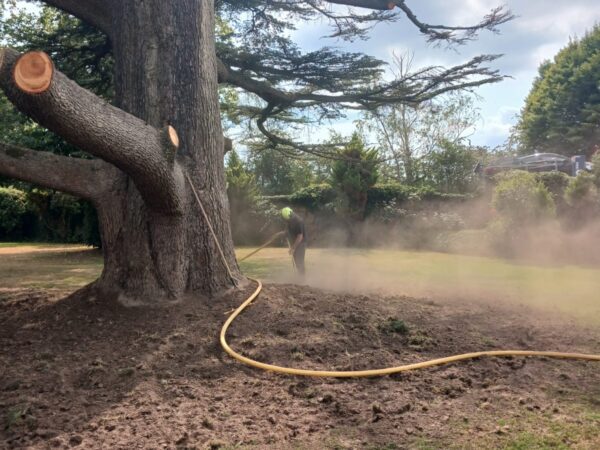
Tree’s like this Atlas Cedar, which we treated recently in South Pembrokeshire, are often the standout feature of a community park area, or garden space. Their presence provides a comforting reminder of the strength and beauty of nature, in the otherwise built-up, neatly manicured environments we tend to live within. Naturally we want to care as best we can for these impressive specimens, but too often they are not able to thrive, due to misunderstanding their needs and how they interact with the soil and ecosystem they are a part of.
In this case, the primary issue confronting this tree, was a heavily waterlogged soil, that resulted from an overused irrigation system installed to water the lawns surrounding it. This problem was exacerbated by the compacted structure of the soil itself, largely resulting from frequent mowing activity which over time weighed heavily on the soil layers, compacting them tightly together. These factors resulted in an anaerobic (low oxygen), soil environment which resulted in a decline of mycorrhizal fungi (essential networks within the community of soil microbiology), an overgrowth of unhelpful bacteria populations, limited root development, and ultimately the decline in health of the Cedar tree which now was in danger of rapid deterioration and becoming a liability to the landowner as well as a hazard to pedestrians.
In order to resolve this issue, Geo-Tree got to work with our Geo-Injector and Air-Spade. We decompacted the soil, with powerful shots of compressed air, through a probe sent 1 m depth into the soil. This opens up the compacted layers within the soil, allowing water to drain more freely and aerobic conditions to return. Following this we then sent shots of Enriched Biochar to partially fill these fissures we created underground – the purpose of this is multifaceted – the biochar is enriched with key minerals, mycorrhizal fungi, enzymes and beneficial bacteria which all nourish the microbiology which the tree depends on to sustain itself. The biochar itself acts as a long term storehouse for these microscopic allies to proliferate from, while also aggregating the soil itself and preventing it from re-compacting as easily.
Our use of the Air-Spade, as pictured above, allowed us to gently ‘fluff up’ the top-soil surrounding the base of the tree without damaging the roots themselves. Following this we raked in a layer of wood-chip mulch, which is a close approximation of the ideal woodland floor conditions that this tree would be able to thrive in. The decomposing wood-chips promote fungal activity (as in a forest floor), nourish the microbiology and increase biodiversity in a way that a lawn is not able to.
We believe that the best treatments are those that up-regulate living systems as a whole, not by treating isolated parts. Through Geo-Tree’s holistic management of this landscape, we were able to significantly support the recovery of this tree, using potent biological amendments that will continue supporting the whole ecosystem for years to come.
Do you have a tree showing signs of decline? Or are you facing problems with compaction on your soil? Get in touch, we’d love to help.